
The right participant management – implement in-house or work with a service provider?

Invitation and attendee management is one of the most important trades in the planning and implementation of events. Simply put, “Without guests, no event!” And since attendee management is also usually at the beginning of any event planning process, it’s a good idea to start thinking about the right approach early on.

The first question that often comes to mind is, “Do it yourself or hand it out to a service provider?” There are good reasons for both and I would like to contrast some thoughts in this post.

The first question is whether it is a single event (e.g., an anniversary) or whether there are a larger number of events in the company over the year that might require the purchase of an in-house solution or
attendee management software
justify. For a single event, the acquisition of an internal tool is usually not worthwhile. Here, a service provider who can configure and provide a system on an ad hoc basis is usually more flexible and also faster to implement.

For multiple or recurring events, using your own attendee management software can be useful and also cost-saving. The first thing to check is what requirements the various formats entail and what range of functions is needed in a system. A conference lasting several days and costing participants money entails different requirements in terms of registration and guest management than a simple evening event for 500 customers and employees.

Another question that arises – are there sufficient internal resources to deal with the acquisition, implementation and subsequent operation of an in-house solution.
In our experience, internal event departments are usually chronically understaffed and tasked with many different tasks and parallel events. Here, outsourcing attendee management to a specialized service provider can free up valuable resources for the other tasks and free up the event department.

Timing is also an important criterion for or against a proprietary system. Events are being decided at ever shorter notice, and lead times are becoming correspondingly shorter. However, the market for subscriber management software is quite confusing and heterogeneous – just defining the requirements, selecting the service providers and dealing with the various tools and licensing models can take several months. And in-house IT hasn’t even had a say yet …

Last but not least, you should be clear about what additional services are needed.
Pure software is only one aspect of attendee management. Full-service providers offer a range of complementary services, starting with design, invitation
invitation management
the provision of
guest hotlines
special functions such as seating or hotel management, or even on-site support for accreditation. accreditation including technology and personnel.

Still have questions about which approach is right for your event?
We will be happy to advise you!

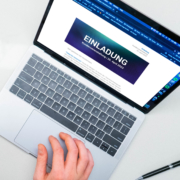
Participant Management Checklist: Creating an optimal briefing for a service provider

The topic of attendee management is often very complex, multifaceted and also varies depending on the type of event. However, in order to obtain the most realistic possible calculation for an implementation as early as the planning phase, it is advisable to think about certain key data, framework conditions and requirements in advance.

A widespread misconception is that the cost of professional attendee management can be measured purely in terms of the number of guests – this is not the case!
Rather, the question arises as to which specific processes must be mapped in participant management and which functions a registration platform must provide.
The spectrum here ranges from simple events, where only the pure admission or cancellation
of the guests must be recorded, up to very complex registrationswhere e.g. also accompanying persons,
hotels
– and travel as well as different program parts have to be managed as well.

These functions must be coordinated and configured in a subscriber management system, perhaps programmed and then deployed. That is where the expense first arises. But whether 150 or 1,500 guests then sign up is not really decisive for the design of the offer.

The following list is intended to help you write as structured a briefing as possible for your next project and thus enable the service provider to calculate the effort as concretely as possible.

Participant Management Checklist:

  • When will the event take place?
  • When should be invited, how long is the registration period?
  • How many guests should be invited and how many guests are expected?
  • How should invitations be sent – digitally, by mail, or a combination?
  • What information should be requested from the guests?
  • Are there different categories of guests that get different queries or options (e.g. a VIP is allowed to bring a companion and also gets an overnight stay, a “normal” guest is not)?
  • In which languages should invitations and registration platform be available?
  • Are escorts, hotel rooms, travel and/or event parts (e.g. workshops) to be managed?
  • Is seating management (seating) required?
  • Should a guest hotline (mail and/or phone) be set up during the registration period?
  • Is also an on-site support (
    check-in of the guests
    ) desired?
  • Should name badges be produced?
  • How long is the on-site period?
  • Are follow up measures like a survey or a picture gallery planned?
  • What budget is available for participant management?

Regarding the last point, many inquirers find it difficult to give an initial order of magnitude here. There seems to be a concern that the service provider would then “approach” the amount mentioned. This is not the case! However, an initial budget helps the service provider to think in the right direction or to provide sensible and targeted advice on which processes and solutions fit into the stated budget.

Event invitation management – digitally by e-mail or by post?

A frequent question from our customers: What is the best way to invite my guests to my event?

Let us say in advance – there are no clear criteria or rules for this.

For cost reasons and also with regard to sustainability, a purely digital invitation by e-mail is of course the best option. You save the effort of designing and producing elaborate invitation cards, there are no packaging and postage costs, and it’s faster, too.

In the following, we will list the reasons that may nevertheless speak in favor of invitation management by mail:

  • Not all email addresses are available or they are not well maintained
  • Email addresses are not personalized, but you have e.g. many info@ addresses
  • Some of those to be invited do not have an e-mail address (e.g. employees from production)
  • Retired employees or employees on parental leave cannot be reached by mail
  • The target group is not tech-savvy or has a high age structure

However, there are also other aspects that can speak in favor of a postal invitation. Thus, a beautifully designed and produced invitation card is significantly more valuable than an email. Especially at high-profile events, such as company anniversaries, it brings a different appreciation to the guests. A postal invitation is also more suitable for conveying a conceptual idea or for setting the emotional mood for the event with the invitation itself.

Last but not least, a postal invitation stays longer in the memory or in the eye of the guests.
Emails “send” quickly, are sorted away, deleted and thus disappear from the focus of the invitee.

So how best to implement invitation management depends on the event format, the target audience, and also timing and budget, among other factors. We will be happy to advise you on the best approach for you. Thanks to our in-house design team, we are also happy to support you in the presentation phase with initial ideas and concrete layouts.