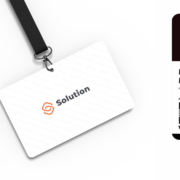
Name badges – superfluous or useful?

Especially in times when there is a lot of talk about sustainability in the event context, the question of whether name badges should still be used at all is becoming increasingly common. Somewhat provocatively, you can of course ask yourself (or the customer) whether a name badge is really the decisive criterion for more or less sustainability at an event to which 1,000 participants from all over Europe have to travel, stay overnight and be catered for …

Nevertheless, you have to face the often critical questions and offer arguments and answers. The following points are a vote in favor of the name badge and may help you in your next discussions.

More than an identification tool

The name badge is more than just a small card with the participant’s name and company on it. It is also a communication and information tool. First of all, it is usually created in the corporate design of the customer and/or the event and, together with a matching lanyard, contributes to the overall branding of the event. In addition, it also provides an advertising space for participating partners or sponsors, who can be integrated with their logos.

In addition to the name and company, further information can also be printed. The reverse side often offers space for a personal agenda, the general program schedule or a room plan. In addition, booked workshops, group affiliations, hotel and seating information or other markings such as guest categories can be printed in a personalized way.

The name badge can also contain the access authorization to certain parts of the event – whether through colour coding or defined icons. Security personnel can therefore see at a glance whether the participant has the necessary access authorization for a room or area.

Provide the name badges with a scannable QR code or an integrated NFC chip, then the corresponding control or registration can also be carried out electronically via smartphones or scanners. This approach can also be used for gamification ideas – for example, let participants collect points at various stations, exhibition stands or areas using the name badge …

It is important to think about the content of the name badge at an early stage and to take this into account when designing it. Our design team will be happy to support you with appropriate design and personalization suggestions.

In order to fully utilize the possibilities described above, it is also important to print the name badges live at check-in and not to pre-produce them days before the event. We also offer the appropriate solutions and hardware for this. Name badges are pre-produced in the corporate design in the print shop and personalized on site in just a few seconds. This makes it possible to react to last-minute changes and creates a flexible check-in situation without alphabetically organized counters. And since only the signs that are actually needed are printed, it is also a little bit sustainable in the end 😉
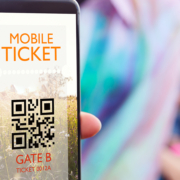
Event ticketing system or attendee management software?

The provider market for ticketing and attendee management software and systems is diverse and equally confusing. Many topics sound similar and are often mixed together. This makes it difficult for customers and potential customers to find their way around the market, compare providers and find the right solution for them.

The topics of ticketing and participant management are often “lumped together”, although the two terms only have a limited connection. The commonality essentially results from the fact that a ticket is also generated and sent for the participant at the end of a participant management or registration process.

How is an event ticketing system used?

Anyone who has ever bought a concert ticket knows the process: you select one or more tickets on the online platform and, depending on the provider and event format, you can also choose your preferred ticket type.Select seats, specifies whether the ticket is to be delivered by post or online and then completes the order process with payment. Tickets are increasingly being personalized so that first and last names have to be added during the ordering process.

What does participant management involve?

Participant management is much more than that. A participant management platform is not only a registration tool but also a communication tool for and with participants. They are usually used over a longer period of time – from sending out an initial save-the-date to registration and follow-up after the event.

During the registration process, much more information is usually requested and managed in the system than just the acceptance or rejection. The registration of accompanying persons, the question of hotel accommodation and types of travel, participation in workshops or the indication of dietary intolerances are typical information that must be obtained for optimal event organization and the best possible care of the participants. As mentioned at the beginning, one or more tickets are usually sent to the participants at the end of the registration process.

On-site accreditation and the reception of guests is also part of good participant management. In addition to simply recording attendance by scanning tickets, there are also many points of contact with guests at the event. Be it the printing of name badges, the distribution of participant documents, the registration of guests at other parts of the program or workshops or simply the professional handling of special and clarification cases.

So there are certainly overlaps between ticketing and subscriber management, but in principle the two disciplines offer very different solutions for very different processes.

If you would like to find out more, please contact us.

“My left left seat is free …”

… or how to allocate seats to guests.

Seating – or seat management – often resembles a big puzzle. Whether it’s row seating in plenary sessions or gala tables for dinner, allocating guests to defined seats is usually a manual and therefore laborious process.

Different requirements often have to be harmonised when allocating seats. These can be political or protocol aspects, but also affiliations to certain participant groups or categories. Accompanying persons, guests who may be honoured or “just” have a birthday must also be taken into account.

Unfortunately, optimal seating is not static, but is subject to a high degree of dynamism, especially in the last days and hours before the event. Cancellations at short notice or name changes have to be processed in the same way as late registrations, additional accompanying persons or other changes to the seating or the schedule. Last but not least, the question always arises: how and when does the guest actually find out where they are seated?

The G1 seating module, which can be integrated into the GuestHub admin area on request, helps event organisers to maintain an overview. Seating plans can be created quickly and flexibly in graphic form. Even a large number of tables or seats in the plenum is no problem – for a better overview, these can be divided into different maps and then jumped to individually for distribution.

Guests to be seated can then be searched, filtered and selected in the guest list according to various criteria and placed in the desired seats with a mouse click. This applies to individual guests as well as selected groups of guests. The system also includes automatic filling of free seats, thus enabling individual seats to be filled very quickly.

The G1 seating module also accesses the live check-in information. Guests who are already present are colour-coded in the seating. As guests only receive their actual seating information at check-in – either as a seating card or printed on the name badge – they can be quickly and flexibly re-seated until they arrive.

We will be happy to advise you on the specific possibilities and show you examples from various events.

Every year again – GuestONE at the Best of Events

Firstly, we would like to wish all our customers, suppliers and partners a happy and healthy new year 2024 and a good start!

The new year traditionally begins for us with our participation in the Best of Events in Dortmund. The leading trade fair for event management will open its doors again on 17 and 18 January. You will find us with a brand new stand in hall 4, stand number A 38.

We would like to invite you and your colleagues to visit the trade fair free of charge. You can order one or more free day tickets for the trade fair using our voucher code 154408 at the following link: https://www.boe-international.de/code

We look forward to your visit and interesting discussions in Dortmund.

How the right participant management can reduce the number of no-shows

A regular occurrence at many events are guests who have registered but then fail to turn up – so-called “no-shows”. These no-shows are annoying as they cost the organiser a lot of money. Food and drinks are provided for these guests, as well as furniture, service staff and giveaways. Even booked hotel rooms are usually charged at 100% in the event of last-minute cancellations.

Of course, there are reasons for cancellations or no-shows at short notice – illness, train or flight cancellations or other urgent appointments cannot always be avoided. However, it is important to reduce the number of “no-shows” to a minimum in order to avoid the unnecessary costs listed above. Good participant management can help with this.

Stay in contact with your guests

A professional participant management system allows you to communicate with guests easily, quickly and continuously. Regular reminder or info emails provide the latest details about the programme, arouse curiosity about the event and help to keep the date and the event in the minds of the guests. Invitations are often sent out early, guests confirm an event in three or four months’ time and then forget about it if they are not kept up to date in the meantime.

Make it easy for your guests

Good participant management solutions offer a so-called re-login for guests. The online registration remains open even after the initial confirmation – the guest can edit or change their registration at any time until the final registration deadline. Each of the mailings listed above should therefore include the access data for online registration so that the guest can return to the registration platform with a single click. A simple cancellation or change link at the end of the email also helps the guest to edit their registration with one click if necessary.

Use a guest hotline

Many events also have a telephone hotline for guests to call with questions about the event or the programme. Use this hotline to proactively follow up with guests, especially those who do not get back to you.

Continuity and transparency – after the event is before the event

Especially for recurring events, participant management improves with repetition. This starts with the invitation, which is often sent out “with a watering can” or the previous year’s mailing list is used. However, the participant behaviour of previous years is usually not taken into account, mostly because this information is no longer available.

A continuous participant management process provides the necessary transparency and analyses – even over several years and events. Participants who repeatedly RSVP and never turn up can be identified and excluded from future invitations.

These are just some of the aspects with which we, as a participant management specialist, can minimise the number of “no-shows”. We would be happy to discuss the topic for your specific event and advise you on the possibilities. Get in touch with us today!

At what point does professional participant management actually pay off?

A frequently asked question is from how many participants is it worthwhile to use a professional participant management software or a service provider.

What data is recorded?

At first glance, one might assume that this generally only makes sense with large numbers of participants. In fact, however, the sheer number of participants is not necessarily the decisive criterion. Much more relevant is the amount of data and information to be queried and managed per guest. If, for example, several accompanying persons can also be registered, if the guest can individually compile his program from many different event parts or if he has complex arrival and departure logistics with different flight segments, then manual processing or Excel lists quickly reach their limits. This also applies if the registration for the event is to take place in several stages or in different time steps. Often the pure participation for a first planning is asked first, travel dates, hotel wishes or the participation in workshops only at a later time.

How many people are organizing the event?

An equally important aspect – how many people are involved in organizing the event and managing participants. Especially when events are organized decentrally and by different people, it is important to have all relevant data available centrally in real time. The prepared (Excel) list, which is usually sent to everyone, is usually already outdated at the time of creation, because some information has already changed again with the guests.

The advantages of a digital system

The use of a participant management system supports an end-to-end digital and DSGVO-compliant process. Digital invitations via email, quick and easy online registrations and email confirmations with eTickets or Wallet are not only “state-of-the-art” nowadays, but they also pay off on the topic of sustainability. In addition, the use of appropriate software saves a lot of internal resources and is less prone to errors. So don’t just look at the number of participants in your considerations, but check which process needs to be mapped, the complexity of the event and which and how much data and information needs to be processed per guest. We will also be happy to help you with an initial assessment and advise you on your event.

GuestONE at the ToolTalk

On 19 September at 9:30 a.m., the free ToolTalk “Event Management Solutions” will start. The one-hour digital format is organised by Katrin Taepke, who has successfully run the blog  “micestens-digital.de” for many years. Katrin Taepke is an expert in participant and event management software and systems. In ToolTalk, she will present three selected providers and their solutions.

On 19 September, we will share the stage with our colleagues from ALOOM and colada. Participation in ToolTalk is free of charge. All you need to do is register briefly at: https://www.micestens-digital.de/tooltalk-event-management-loesungen/ the access data will then be sent to you by e-mail. We are looking forward to an exciting talk and many interested spectators.

Fast admission thanks to digital accreditation

To ensure that an event gets off to a positive start for guests, quick check-in and admission are also of particular importance. Nothing is more annoying and inconvenient for guests than standing in line at a counter for a long time, only to find out when it’s finally your turn that your name is unfortunately not on the guest list or that you can’t find your name tag.

The advantages of a digital system

A quick and comfortable check-in process for the guests is no trick. As a general rule, it is advisable to use a digital system for accreditation as well and to dispense with printed lists, manual check-offs and pre-produced name tags. This is not only faster, but also much more flexible. On the one hand, there is no need to divide the counters into alphabetical order – guests can distribute themselves flexibly among the available stations and thus make optimum use of all the counters.

Instead of pre-printed name badges being picked out of random file boxes, we recommend that the badge not be printed live until the guest checks in. Not only is it faster (in 2-3 seconds the sign is printed), it is also much more sustainable as there is no need to throw away signs for no-shows. Another important effect – overviews of already present and still missing guests are available in the system in real time and thus enable to react if necessary in the event process.

In the check-in system, all guest data is available at the touch of a button. Important information such as guest categories, booked program sections or materials to be issued can be displayed in the check-in mask, thus enabling a very personal approach and competent treatment of guests. All systems are developed in such a way that only a short hostess briefing of a few minutes is necessary to operate everything correctly. Experienced project managers from GuestONE take care of setting up the technology, brief the staff and are present as troubleshooters during the admission.

The digital check-in from GuestONE

If you would like to learn more about our procedures and possibilities, you can find more information and examples here: GuestHub check in

The right participant management platform – all-in-one or customized?

The market for participant management software and platforms is more than confusing. Countless providers offer different solutions, and the Corona pandemic has spawned further – in some cases new – service providers. Over the last few years, so-called “all-in-one” platforms in particular have come onto the market. Large, all-encompassing systems, with countless functions and integrated apps, usable for any event format – whether live, digital or hybrid. Quasi the famous “eierlegende Wollmilchsau” …

All in one solutions

There is no doubt that there is a need for such fully integrated platforms, but all systems have one thing in common: for the majority of projects that are to be implemented with them, they are simply too overloaded with functions and too complex to operate! High costs, time-consuming installations and configurations, and poor support create additional challenges for customers and make them look for alternatives.

Event specific solutions

An alternative are flexible and modular “building block systems”, such as our G1 GuestHub. In the process, a solution is configured very specifically to the event-specific needs. The customer gets (and pays for) only those functions that he actually needs for the implementation of the project. There are no limits to the scope of services – numerous modules, such as hotel or workshop management or seating, can be adapted and implemented as required in a very short time.

So before deciding on one solution or another on the market, it helps to take a look at your own event formats and the associated specific requirements for attendee management. If you mainly implement online or day events, then you usually do not need an elaborate hotel management. Group registrations or waiting list functions also play no role in a large number of events.

TIP: Base your requirements list on the 90% standard events, not the special case that only comes up once every two years!

Supplementary services

You should also pay attention to possible additional services that may be required as part of the event organization. For example, many of the major providers offer no or limited on-site services. These services do not scale; instead, you have to maintain the appropriate personnel and technology for them. The question here is what level of service is desired. If a smartphone app for guest check-in is not enough and you do not want to deal with third-party providers for on-site accreditation, then it is also advisable to look for a specialized full-service provider who can also guarantee comprehensive on-site support.

Nachhaltiges Event

How the right attendee management contributes to sustainable events

Ask any company or agency about the next big trend in events, trade shows and conventions and the answer is unanimous: “Sustainability!”
Events must and should be sustainable and as CO2-neutral as possible – an aspect to which not only the organizers but also more and more participants of events attach increased importance.

This is what sustainable events are all about!

In the context of events, the first things that come to mind when thinking about sustainability are technical equipment, devices and their power consumption, reusable decoration, furniture or set construction and, of course, the catering for the guests, which is increasingly being designed to be vegetarian or even vegan. But the right invitation and participant management can also make a significant contribution to the issue of sustainability.

This begins with the decision in favor of a completely digital and thus paperless process. Invitations can be sent conveniently and easily by mail, and registration for the event takes place via a corresponding online portal. Faxes, postcards or other analog registration methods are just as passé as sending confirmations or tickets by mail.
With the registration, each guest receives a confirmation by mail as well as a digital ticket or wallet for quick entry on site.

Sustainable travel options can also be recorded and organized via online registration. For example, you can implement the booking of Deutsche Bahn event tickets into the registration process. With the event ticket from Deutsche Bahn, participants travel on local and long-distance trains with 100 percent green electricity and thus CO2-free. This will sustainably reduce the event’s CO2 emissions.

Car pools for the joint use of (company) vehicles can also be easily organized via the participant management.

Digital also continues on site. Instead of pre-produced participant documents and name tags, we only produce them when the guest actually appears on site. Live printing is not only faster than picking pre-printed documents out of file boxes, it is also much more flexible, as alphabetically divided counters can be dispensed with. Above all, however, the amount of waste is significantly reduced, since for non-arriving guests is not produced in the first place.

Request participant management for a sustainable event

Sustainability can therefore begin with the selection of the right participant management or with the definition of the right processes. Discuss your next event idea with us and let’s figure out together how we can help make it as sustainable as possible.